
Customer loyalty is not a program. It is a result. The question behind it is simple: does the customer come back. The answer depends on two things the brand actually controls, and neither of them is the rewards mechanic.
The first is the audience the brand has built. Who is in it, how those contacts were collected, whether they consented, and whether the contact data is still good. The second is how that audience gets activated. Which channel, at which moment, with visibility into who is still reachable before the message goes out.
Brands that get both right see compounding repeat revenue. Brands that get either one wrong see a slow erosion that no rewards mechanic can fix.
Acquiring the audience: what makes a customer base actually loyalty-ready
The quality of a customer base is decided at the moment of signup. Everything that happens later, every campaign, every activation, every retention effort, is constrained by what was captured at that point.
Three things separate an audience that produces repeat revenue from an audience that mostly produces send volume.
The first is verified contact data. A phone number captured without confirmation carries a real risk: the number may not be real, may not be active, or may not belong to the person signing up. Verification at the point of signup, through a one-time password sent as an SMS to the device, removes that risk before it enters the database. The user enters the number, receives a short code on their phone, and types it back to confirm. Around 95 percent of users who receive the code complete this step. That means a brand can move almost the entire signup flow to verified contacts without losing meaningful conversion.
The second is consent that holds up. Privacy regulation has tightened across most markets, and the gap between "we have the contact" and "we can legally market to the contact" is widening. Audiences built through explicit opt-in flows, with documented consent, remain usable as the rules continue to change. Audiences built without that discipline lose value every time a regulation updates.
The third is the entry point itself. The signup tool matters less than the moment it appears. A popup that fires the second a visitor lands on the homepage interrupts before any interest has formed, and the contacts it collects behave accordingly. A popup configured around visitor behaviour produces a different outcome. The strongest results come from signup tools that appear at moments the visitor has already shown intent: after a set time on the page, after scrolling past a defined depth on a product page, on exit as a final recovery moment, or as a small persistent teaser the visitor can open when they are ready. Each of these can be configured per market and per page. The contacts captured this way activate at higher rates because the moment of capture was already a moment of engagement.
The same logic extends offline. The customer who opts in while standing in a retail location, having just used the product or spoken to a staff member, is a fundamentally different signal than a passing online click. NFC tags placed at the till, the fitting room, or near a specific product turn that physical moment of engagement into a digital contact in seconds. The customer holds their phone near the tag, a signup page opens, the number is verified, and the contact enters the same database as every other signup. QR codes do the same work across posters, packaging, point-of-sale materials, and out-of-home advertising. Retail locations using NFC and QR for opt-in see an average of 30 signups per day per location, with top locations reaching 60.
A customer base built on verified contacts, with clean consent, captured at moments of real engagement, behaves differently downstream. It activates faster, responds at higher rates, and degrades more slowly.
Activating the audience: what turns contacts into repeat revenue
A verified, consented audience produces no repeat revenue on its own. The next question is whether the brand can actually reach it.
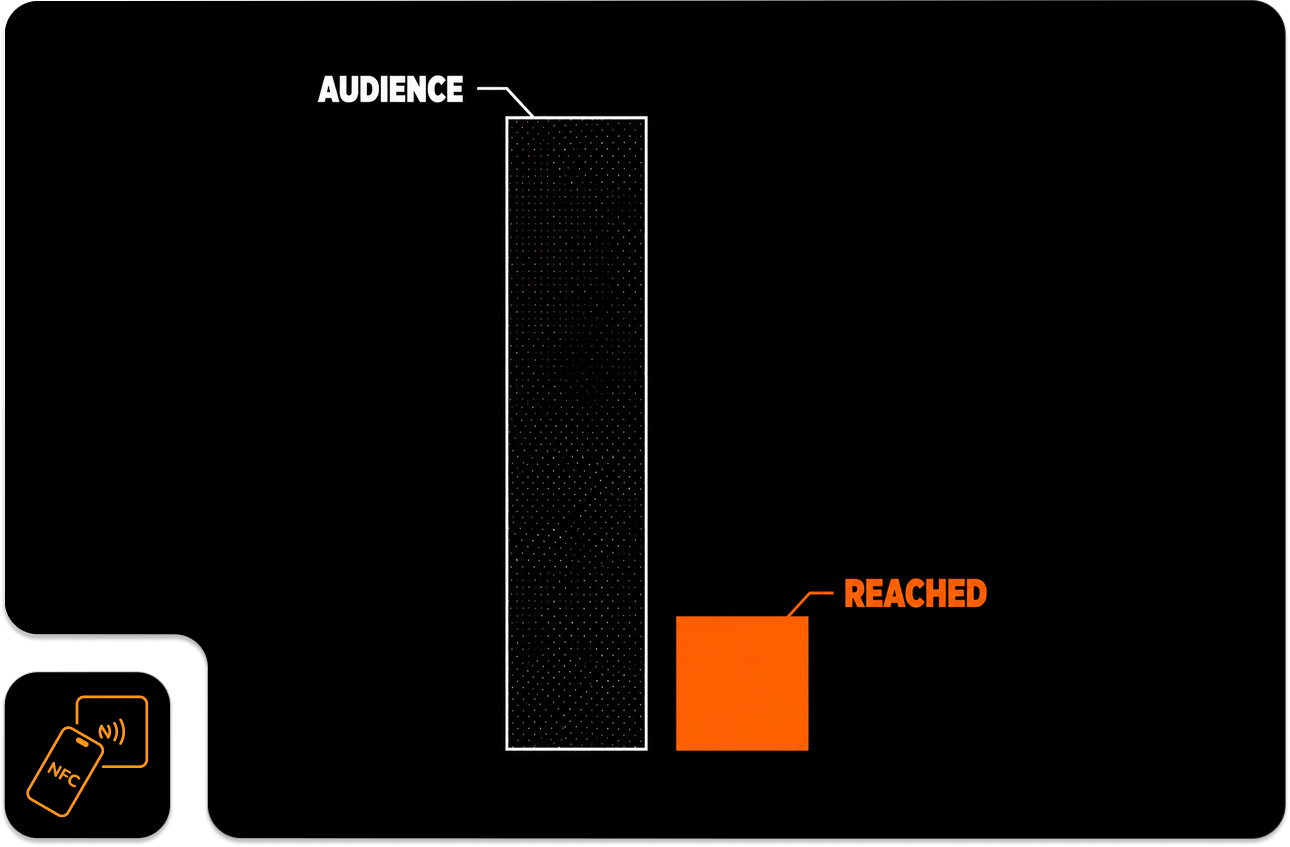
For most of the last decade, email did the work. The economics were good. Open rates were high enough, inbox competition was lower, and the cost of sending was close to zero. That arrangement has been quietly unwinding. Industry email open rates now sit between 15 and 20 percent. The customer signs up, the brand has the contact, the message is sent, and the customer never sees it. Repeat revenue depends on a moment the customer never knew existed.
Mobile messaging has moved in the opposite direction. Open rates run above 90 percent, and 95 percent of messages are read within three minutes. For a retention message tied to a window of purchase intent, this is the difference between participating in the buying decision and not.
The activation question splits into three operational decisions.
Channel choice per market is the first.
Customer messaging behaviour is not global. WhatsApp dominates communication in some regions, SMS in others. Brands that default to a single channel everywhere lose ground in the markets where it does not fit. The strongest international retention work runs a channel mix decided market by market, based on where the audience actually reads.
Reachability before send is the second.
Most brands discover delivery problems after the campaign has run, in the post-mortem. The pattern is the same every quarter: a portion of the audience is no longer reachable, the budget has already been spent, and the loss is recorded. Knowing which contacts are reachable before the message goes out changes the economics of every campaign. Spend goes to contacts the message will actually reach. Wasted send volume drops. For brands at enterprise scale, this is one of the few operational changes that improves revenue and reduces cost in the same quarter.
Measurement at the contact level is the third.
Aggregate open rates and aggregate click rates show what happened across the audience. They do not show which segments are silently going dark, which individual contacts are degrading, or which links in which messages actually drove the revenue. Customer loyalty compounds when the brand can see what is happening at the level of the individual contact, not the campaign average.
Where customer loyalty is being lost
Three patterns explain most of the gap between brands that compound repeat revenue and brands that plateau.
The first is an unverified audience.
A customer base built without contact verification carries dead weight from day one. Every campaign sent to that file pays to reach contacts that will never deliver. The cost is invisible at signup and unavoidable later.
The second is a channel that does not match the market.
A brand sending email to customers who read WhatsApp, or SMS to customers who prefer Viber, is paying full price for a fraction of the reach. The customer is not disloyal. The brand simply is not in the channel where the customer is.
The third is no visibility into reachability.
Brands without contact-level engagement signals discover their audience has degraded only after revenue has already dropped. By the time the trend shows up in quarterly numbers, the recovery work is significantly more expensive than the prevention would have been.
What the strongest brands do differently
Five things show up consistently in brands that produce compounding repeat revenue.
They verify contacts at the moment of signup
The audience is clean from day one. Activation campaigns send to a list that actually exists. The cost of dead contacts is eliminated, not managed.
They capture contacts at moments of real engagement
Signup tools fire when the visitor has already shown interest, not the second the page loads. Offline opt-in mechanisms, including NFC tags in retail locations and QR codes across physical materials, produce signups that activate at higher rates than passive online capture. The customer is closer to the product, closer to the purchase decision, and closer to a reason to come back.
They match the channel to the market
International retention is run as a per-market decision, not a corporate default. The brands getting this right see noticeably higher engagement in regions where their competitors are sending to channels no one opens.
They know who is reachable before the campaign sends
Reachability scoring before send removes the spend on unreachable contacts and shows which segments are degrading before the revenue drops. This is the operational discipline that separates a customer file from a customer asset.
They treat consented mobile contacts as a balance-sheet asset
A verified, consented phone contact is first-party data the brand owns. It does not depreciate when a platform changes its rules. For boards looking at the durability of marketing assets, this is becoming the conversation.
What good looks like
A brand with a verified, reachable audience produces a different commercial profile within the first year.
Activation cycles shorten. Send budget moves toward contacts that actually receive the message, and away from numbers that never deliver. The contact file becomes a measurable asset, with engagement visible at the level of the individual customer rather than the campaign average. Acquisition and retention start to share the same data instead of running in parallel.
The work that produces this profile is the layer beneath the retention campaign: verification at signup, capture at moments of real engagement, channel logic per market, reachability scoring before send, measurement at the contact level. Brands that invest in this layer see customer loyalty compound. Brands that do not, see it erode.
FAQ
What drives customer loyalty in 2026?
Two things the brand actually controls: the quality of the audience built and how that audience gets activated. Loyalty depends less on the rewards mechanic added on top and more on whether the contact data is verified, the consent holds up under privacy regulation, and the channel choice matches where the customer actually reads messages. Brands that get those layers right see compounding repeat revenue.
How do you measure customer loyalty?
Through repeat revenue at the contact level, not aggregate engagement at the campaign level. Aggregate open and click rates show what happened across the audience. Contact-level measurement shows which individual customers are reachable, which segments are silently going dark, and which messages drove which purchases. The first view averages out the loss; the second identifies what to fix.
Why is email no longer enough for customer retention?
Email open rates across the industry sit between 15 and 20 percent, and Apple Mail Privacy Protection plus Gmail's image proxy mean the open figures that do appear are partially driven by server activity rather than human attention. The channel still does work for transactional and long-form content, but for the retention moment that decides whether a customer comes back, a message that lands in a 90% open rate channel is doing different work from one that lands in a 15-20% one.
Why is contact verification important for customer retention?
A customer base built without verification carries dead weight from day one. Every campaign sent to that file pays to reach contacts that will never deliver, and the cost is invisible at signup and unavoidable later. Verification at the point of signup, through a one-time password sent to the device, removes that risk before it enters the database. About 95% of users who receive the code complete the step, so the contact base stays clean without losing meaningful volume.
How do you build customer loyalty across multiple countries?
Per market, not as a corporate default. Customer messaging behavior is not the same everywhere; WhatsApp dominates communication in some regions, SMS in others. A brand sending email to customers who read WhatsApp, or SMS to customers who prefer Viber, is paying full price for a fraction of the reach. International retention is run as a per-market channel decision, with reachability scored before each send.
More from the blog


See what your own stores would collect
We'll set up a pilot placement in one of your locations and show you the verified contacts it produces, before you commit to anything wider.
