
.png)
Email built modern direct marketing. It still delivers for transactional messages, account notifications, and long-form nurture, and it will keep doing so. What has changed sits outside the channel itself. Privacy features have rewritten how engagement is measured. Inbox competition has grown sharply. Consumer attention has moved toward mobile in a way that now shows up consistently in the numbers. For marketing leaders planning the 2026 budget, the question is not whether email still works. It is what the channel mix should look like when the surrounding environment has shifted this much.
This article covers three market shifts that have changed email's economics, and what a parallel mobile audience looks like when it is built on the same discipline that made email programs successful in the first place.
The Measurement Signal Has Shifted
Most marketing teams have built reporting and automation around the email open rate for two decades. Two platform-level changes have made that signal less reliable.
Apple Mail Privacy Protection (MPP), introduced in 2021 with iOS 15, pre-loads remote content on Apple servers at the moment of delivery, before the recipient opens anything. Gmail has operated its own image proxy since 2013, which caches images server-side when the message arrives. In both cases, the tracking pixel can fire without a human looking at the message.
This is not a marginal population. According to Litmus, Apple accounts for 45.51% of global email opens and Gmail for 23.54%. Together they represent close to 70% of all opens. Litmus, which publishes these numbers as the email industry's standard reference, states directly in its own methodology note that Apple opens "are not considered reliable opens." The largest measurement provider in email marketing is describing the single largest source of opens as unreliable. That is the reality every sender is reporting against.
Most marketing organizations have already responded by shifting primary KPIs toward clicks, replies, and revenue per send. That shift is the right one. The remaining gap is that email never had a strong pre-send measurement of audience quality, and the post-send signals that existed have become noisier. Reach is now decided before the campaign goes out, on a list whose reachability is largely estimated.
Inbox Competition Has Intensified
The volume of email reaching any given inbox has grown, driven in part by AI-generated outreach at scale. Promotion tabs and priority sorting now sit between the sender and the reader, which is a good outcome for the user. For senders, it means more work is required to earn the same visibility. Reported industry open rate averages of 20 to 28% reflect an environment where a majority of the list does not see any single send, even before adjusting for proxy-driven inflation.
The practical implication for a channel strategy: reach inside email has become more expensive to acquire, and channels with default attention are worth evaluating on equal footing.
Mobile Messaging Has Earned Default Attention
A consistent finding shows up across consumer research: most text messages are read within a few minutes of receipt. The reason is structural rather than marketing-driven. SMS and WhatsApp also carry banking alerts, delivery confirmations, two-factor codes, and messages from family. For most users, silencing these channels carries a real cost, so notifications stay on by default. That does not make mobile messaging immune to fatigue, which is why send frequency and relevance still matter. It does mean a well-targeted message on these channels lands on a screen the user will look at.
The performance benchmarks follow from this. SMS open rates sit in the 90%+ range. Click-through rates run from 5 to 30% depending on vertical, compared with low single digits for email. Return on investment (ROI) for SMS reaches 8.6 dollars per dollar spent at an average order value of 28 dollars. These are not incremental differences. They are the kind of gaps that justify reallocating a share of the budget rather than adding mobile as an afterthought.
What a Verified Mobile Audience Requires
Building a verified mobile audience is a different exercise from collecting emails, and the method reflects that. Three elements matter.
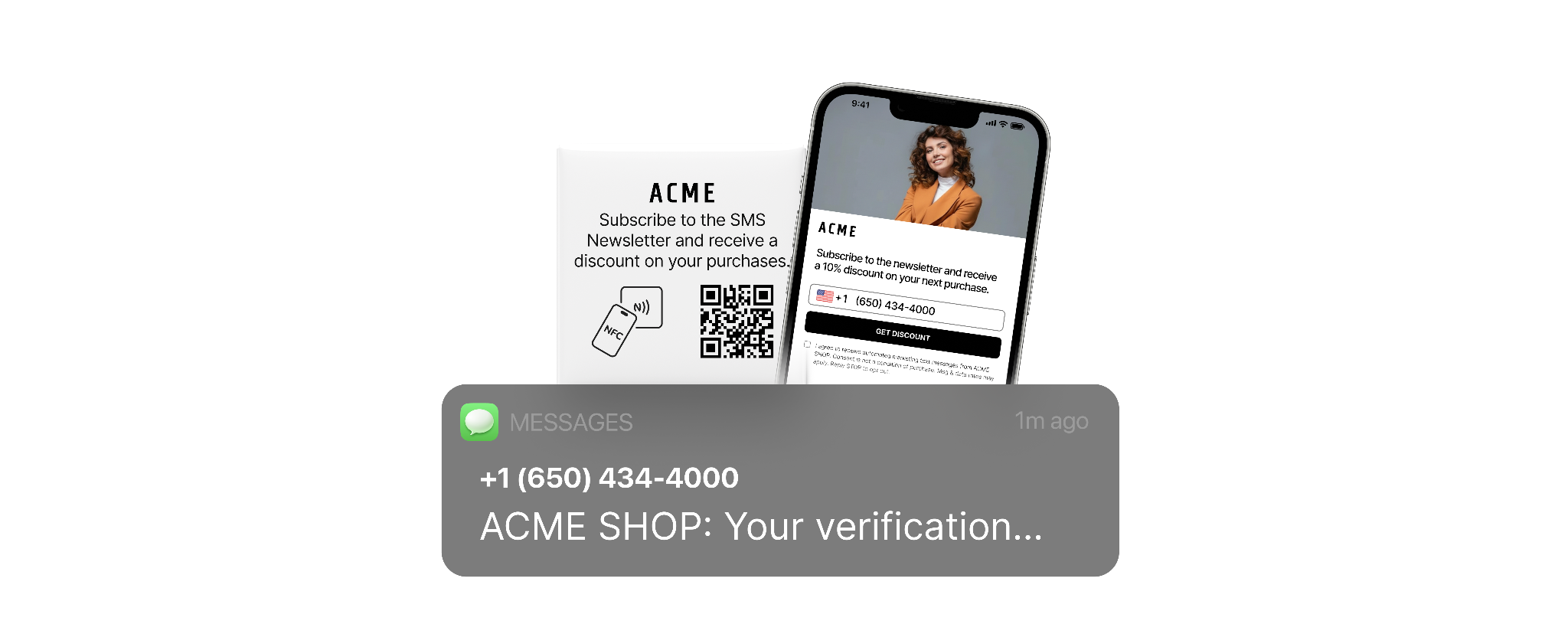
Deliberate collection. Popups, landing pages, QR codes, and in-store near-field communication (NFC) tags all work for capturing phone numbers, with the right mix depending on where the brand already has customer contact. The shift is treating phone as a primary field rather than a secondary one on an email form.
Verification at sign-up. A one-time password (OTP) confirms the number belongs to a real user on a real device. Confirmation rates typically run around 95%. The numbers that fail at this step are often the same records that would otherwise sit in a customer relationship management (CRM) system as ghost contacts for years.
Reachability measurement before send. Delivery Health is a contact-level engagement scoring system built on native carrier signals. It identifies which contacts are reachable before a campaign goes out, without tracking pixels or third-party data, which keeps it compliant with the General Data Protection Regulation (GDPR). This is the pre-send audience quality signal that email has never offered, and it matters more now that post-send signals in email have become noisier.
What This Means for 2026 Planning
For marketing leaders shaping the 2026 plan, the practical move is additive: build a verified mobile audience alongside the existing email program. The budget question becomes where the incremental dollar goes, and on the current performance numbers, a verified phone contact is doing more work than an email contact against most metrics that connect to revenue.
2way builds this layer across SMS, WhatsApp, and Viber, in 180 countries, and works alongside an existing CRM rather than replacing it. Standard technical setup takes 48 hours.
To see what a verified audience looks like on your own data, contact the 2way team.
Frequently Asked Questions about Email as a Marketing Channel
Why have email open rates become an unreliable metric?
Apple Mail Privacy Protection, introduced in 2021, pre-loads email content on Apple servers at the moment of delivery, which can trigger the tracking pixel before anyone actually opens the message. Gmail has operated a similar image proxy since 2013. Together these two clients account for close to 70% of all email opens. Litmus, the standard measurement reference for the email industry, describes Apple opens directly as unreliable. Most opens reported in email dashboards today reflect server activity, not human attention.
Has inbox competition actually increased, or does it just feel that way?
The volume of email reaching any given inbox has grown, driven in part by AI-generated outreach at scale. Promotion tabs and priority sorting now sit between the sender and the reader. Reported industry open rate averages of 20 to 28% reflect an environment where the majority of a list does not see any individual send, even before accounting for proxy-driven inflation in the open rate figures.
Why do SMS and WhatsApp messages get read at higher rates than email?
The reason is structural. Mobile messaging channels carry banking alerts, delivery confirmations, two-factor authentication codes, and personal messages. Most users keep notifications active because silencing these channels carries a real cost. A marketing message sent through the same channel lands on a screen the user will look at. SMS open rates sit above 90%, compared with 20 to 28% for email across the industry.
What is Delivery Health and why does it matter?
Delivery Health is a contact-level engagement scoring system built on native carrier signals. It identifies which contacts are reachable before a campaign is sent, without tracking pixels or third-party data. This gives marketers a pre-send measure of audience quality that email has never provided, and it remains GDPR-compliant because it does not rely on third-party data sources.
Does building a mobile audience mean replacing an existing email program?
No. The practical approach is additive: building a verified mobile audience alongside an existing email program rather than instead of it. Email continues to serve transactional messages, account notifications, and long-form content well. The question for budget planning is where incremental investment goes, given the current performance gap between a verified phone contact and an email contact against metrics that connect directly to revenue.
More from the blog


See what your own stores would collect
We'll set up a pilot placement in one of your locations and show you the verified contacts it produces, before you commit to anything wider.
