
Your stores generate the most valuable customers and the least data
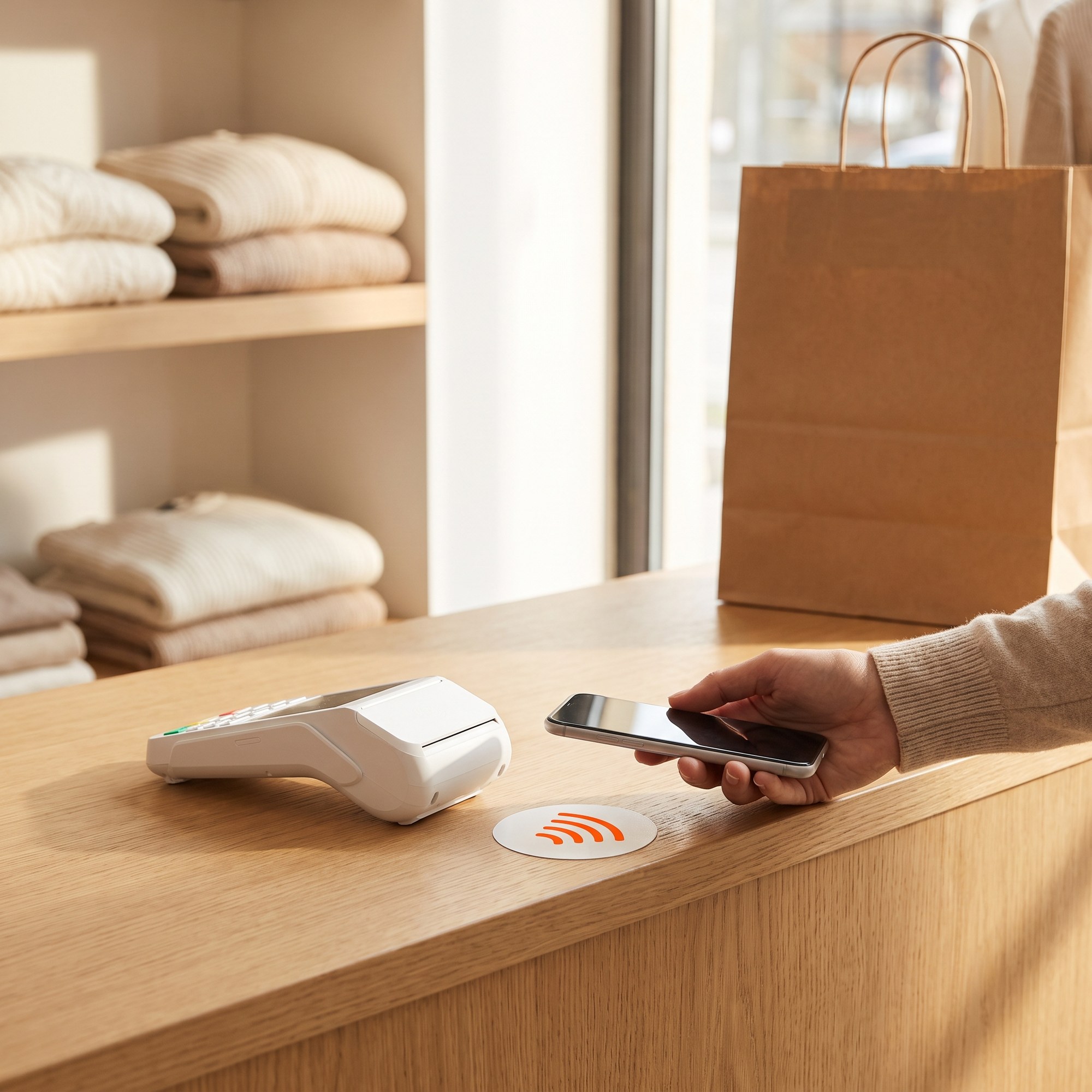
A sign at the checkout, a tap, a confirmed number. In-store visitors enter the same database as online customers, with the store they came from attached. Nothing changes at the point of sale, in the queue or on the staff rota.
Trusted by teams that sell everywhere







Everything online is measured. Everything in the store is estimated
Four situations every store network recognizes.
01
A customer visits the same store weekly and never appears in a single report
They pay by card, take the receipt, leave. No number, no consent, no segment, no campaign. In the CRM they do not exist, so in the budget they do not count.
02
You defend the store network with footfall counters and gut feel
Which locations attract customers who go on to spend more? Which retail campaigns produced anything at all? Without an identifier at the point of contact, the answer is an argument rather than a figure.
03
Sign-up at the till means an app, a form and a queue
Staff are asked to sell a loyalty program in the few seconds a customer is at the counter. Adoption reflects the difficulty, and staff quietly stop asking.
04
The same customer is two records, or none
The e-commerce team and the retail team report separately because the customer is only identified in one of the two places.
How 2way works
Five steps, the same on your website and in your stores.
Turn each visit into a contact
A customer taps an NFC sign at the till, scans the QR code printed on it, or sees a popup the moment they show buying intent online. There is no app to install. An average store collects around 30 sign-ups a day.

Only real, consented numbers
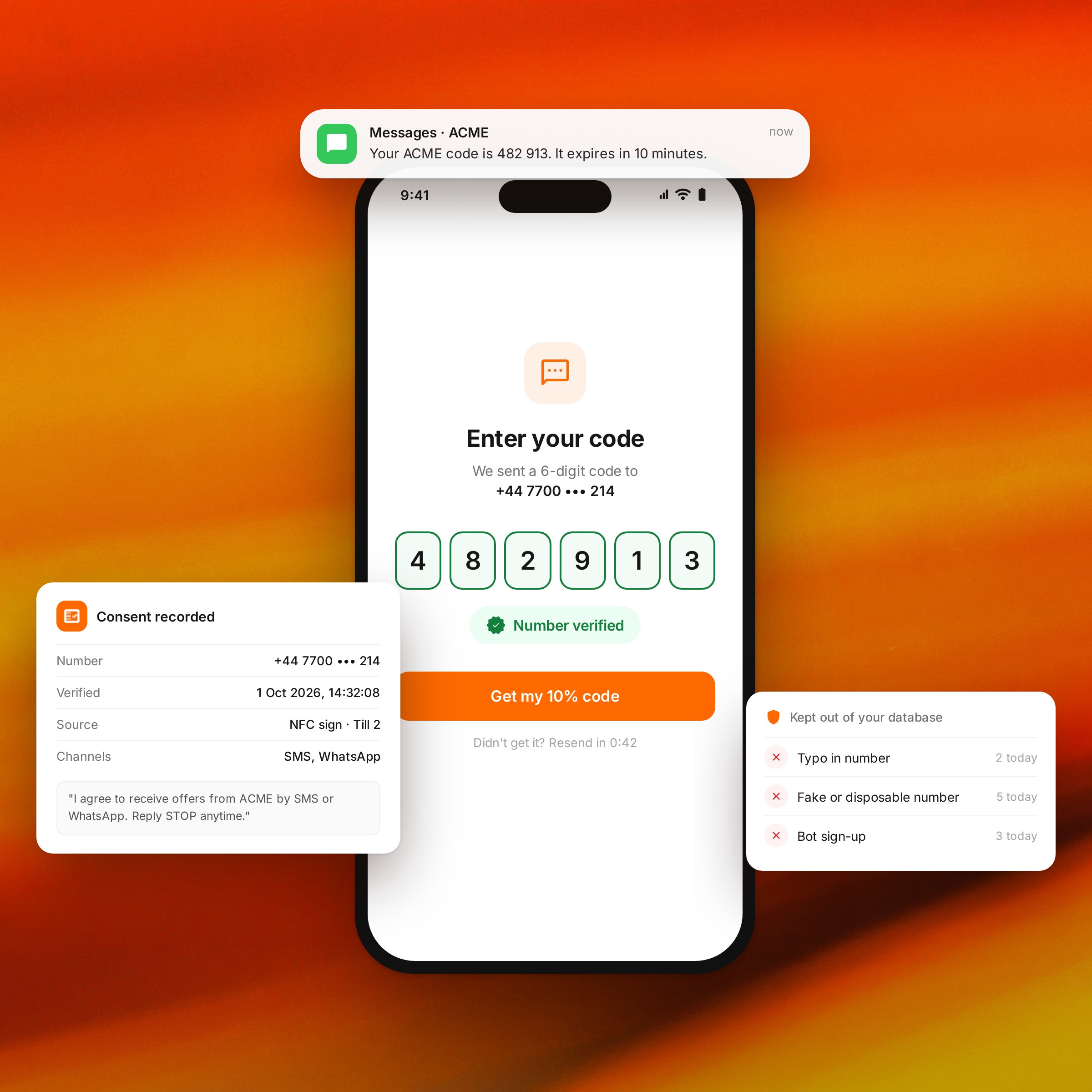
They enter a phone number and confirm it with a one-time code, so typos, fake numbers and bots never reach your database. Consent is recorded with the timestamp and the exact wording they saw, and it can be exported as an audit trail.
Give shoppers a reason to say yes
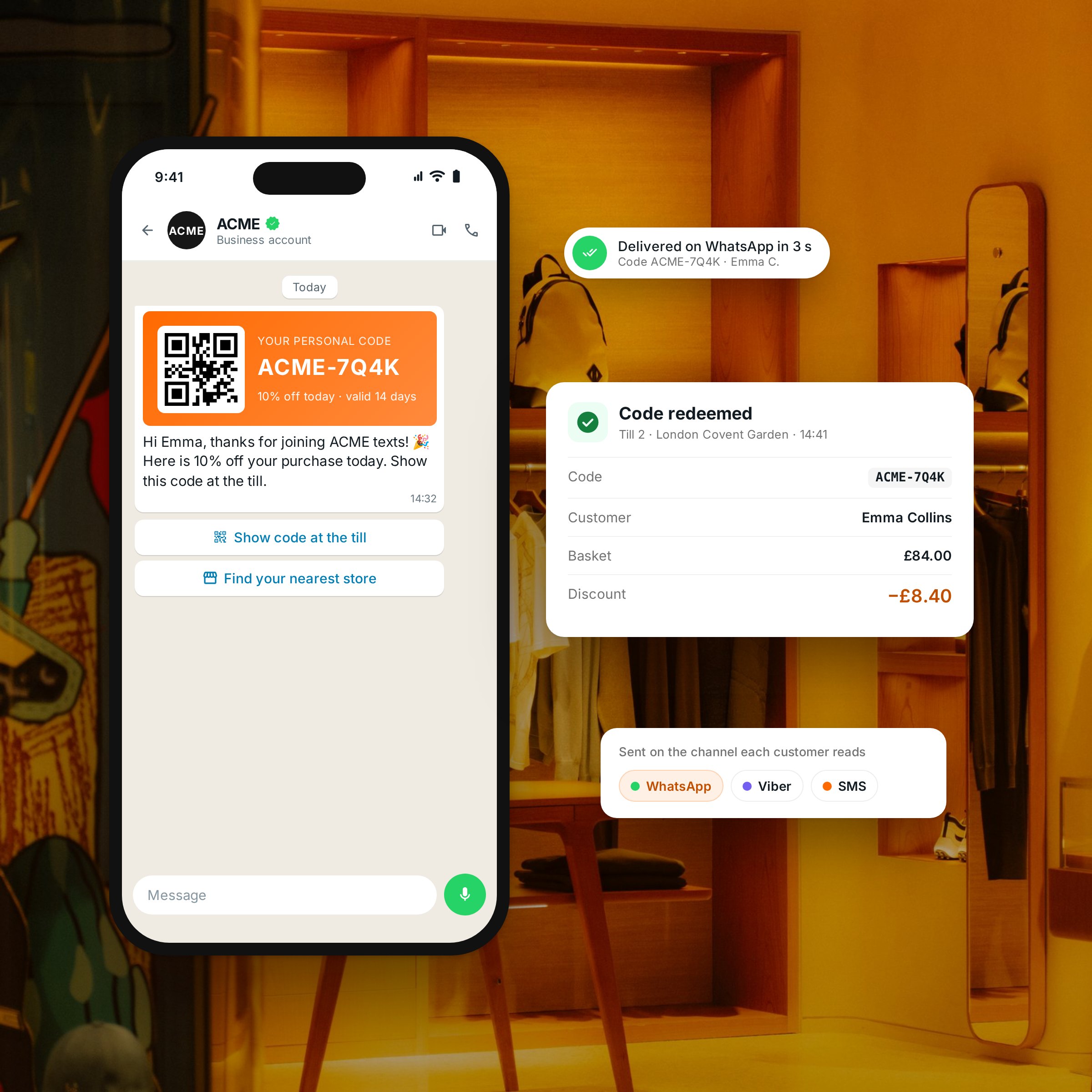
A personal discount code arrives within seconds on WhatsApp, SMS or Viber, depending on the market. In store, the cashier scans it on the spot. Because every code is unique, you know exactly who used it and when.
Reach them using the channel they use every day
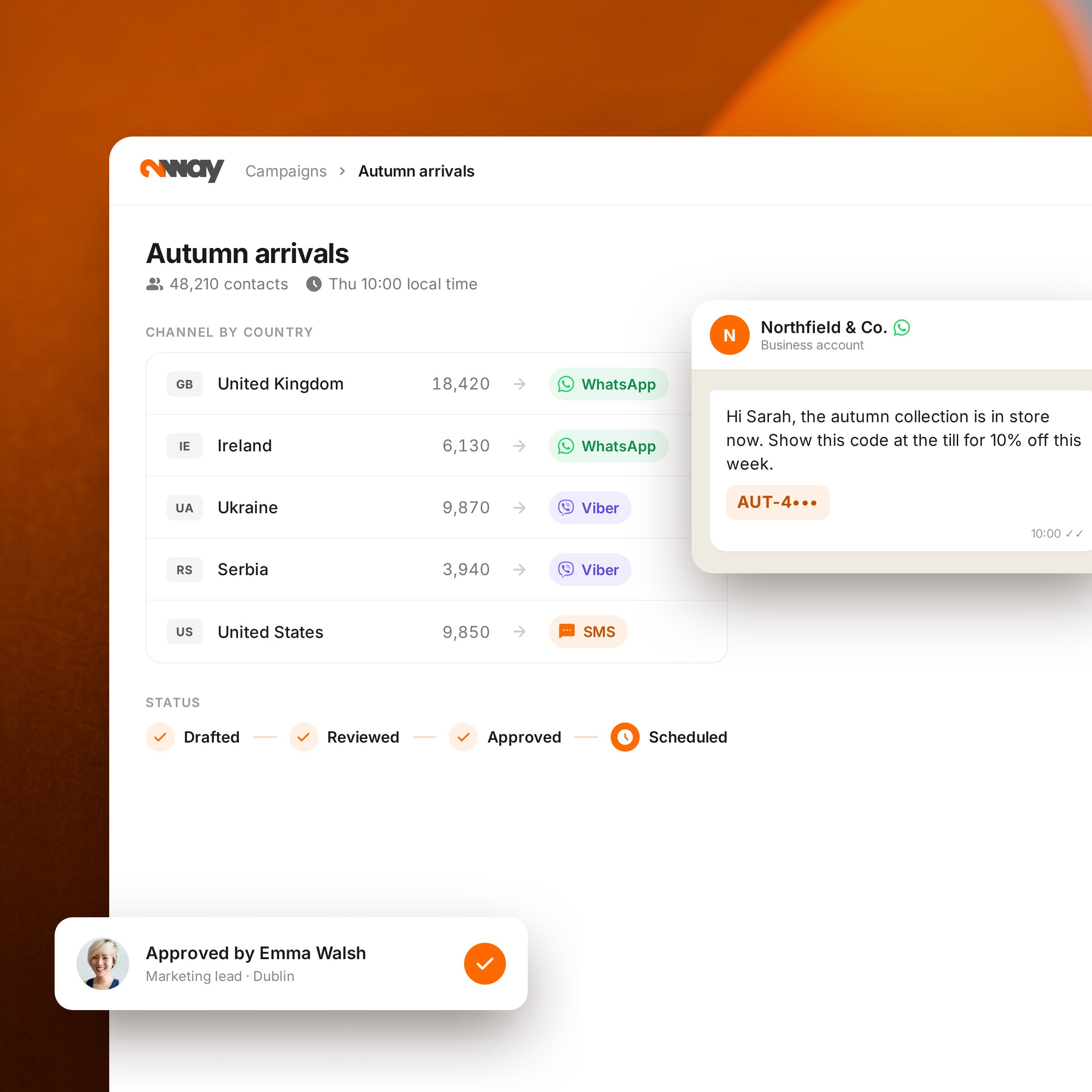
Your message lands in the same inbox as a text from their partner, not in a promotions tab. Send campaigns to your own base on the channel people read in each country: WhatsApp across much of Europe, Viber in Ukraine and the Balkans, SMS in the US. Your team approves every message before it goes out.
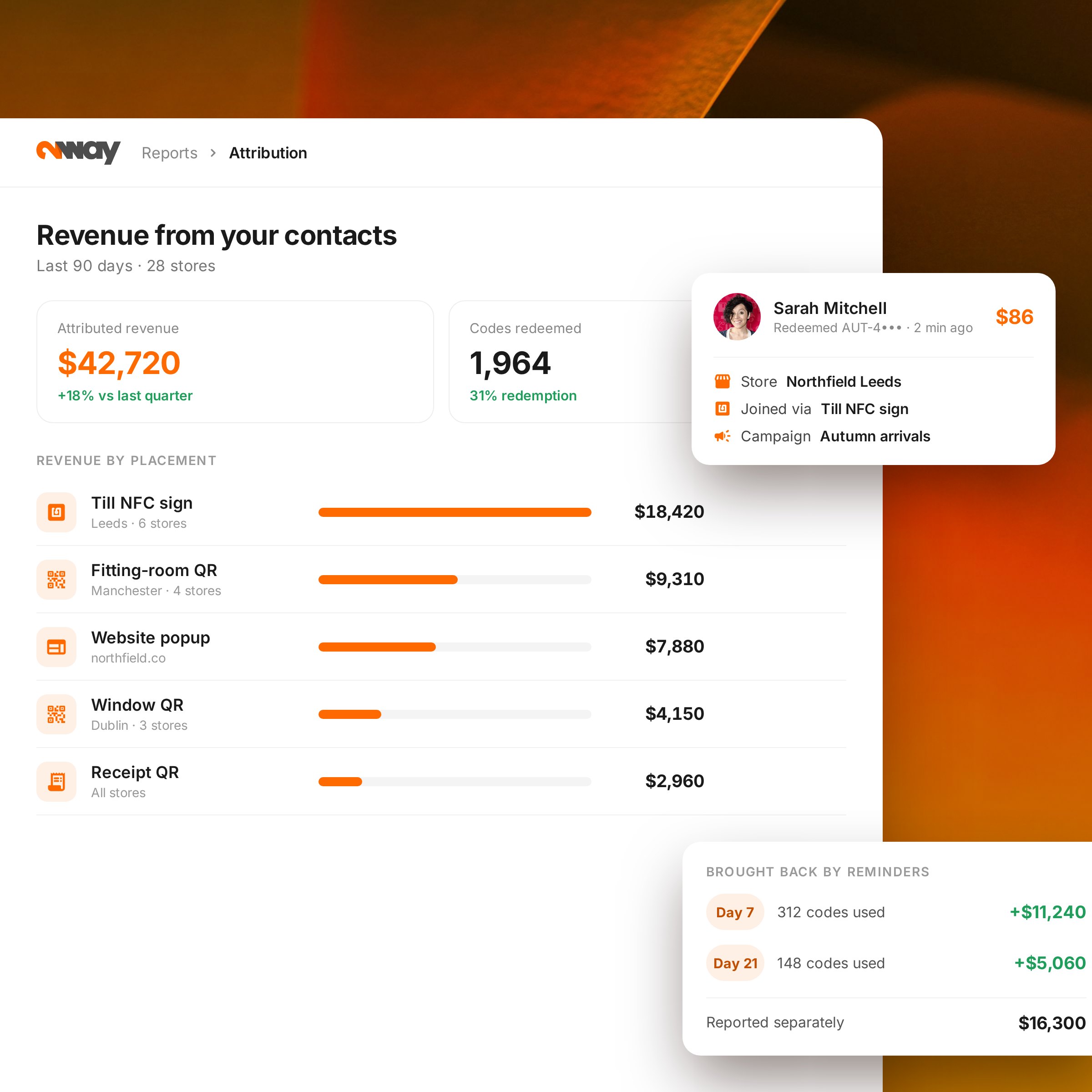
Track the revenue per contact point and placement
Every redemption is tied to the person, the store and the placement that produced it, so you can compare a till sign with a fitting-room sign or a paid campaign. Unused codes get automatic reminders after 7 and 21 days, and the revenue they bring back is reported separately.

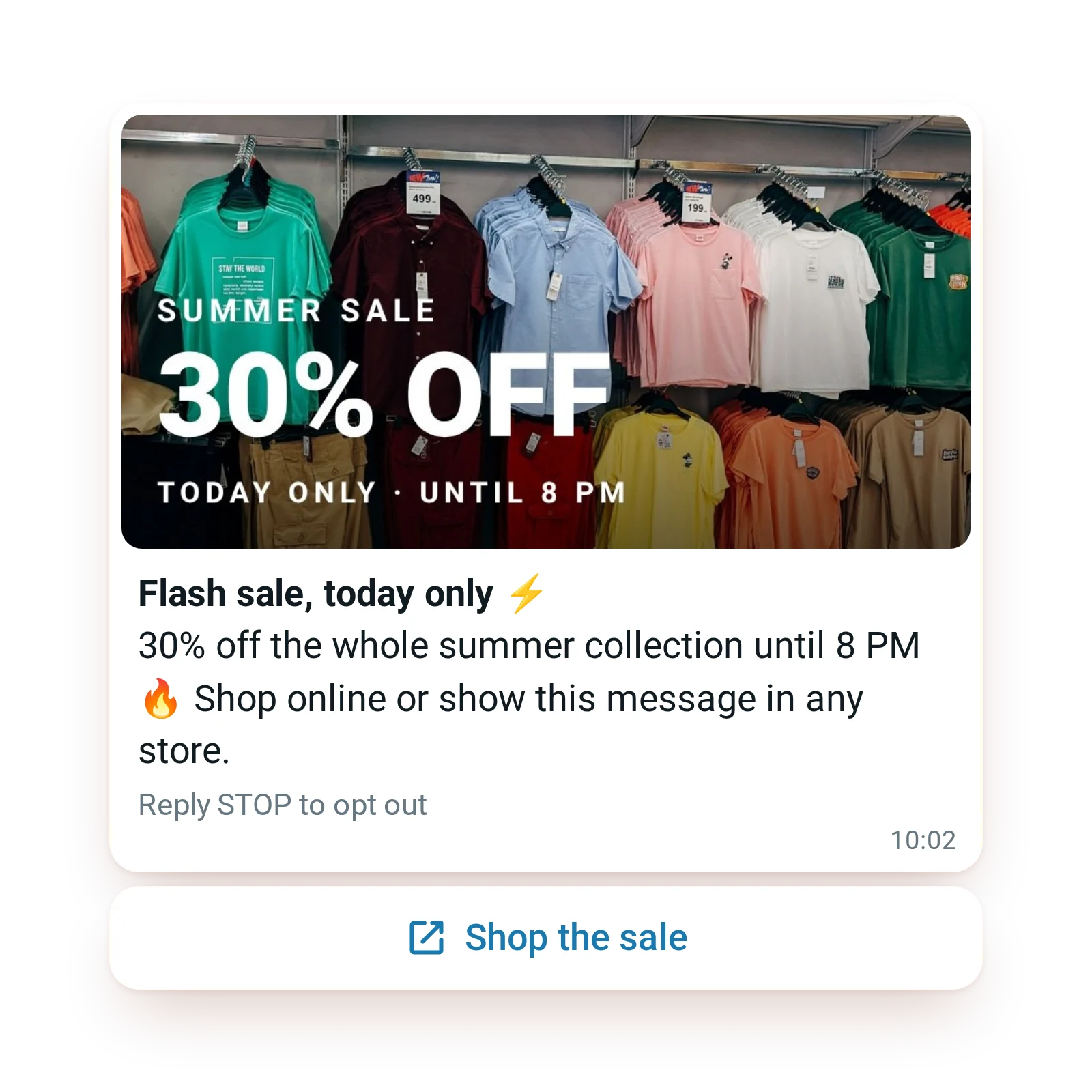
Fill the store with one WhatsApp message
Send a same-day offer with a photo and a button. Customers show it at the till, and you see which store and which message earned the sale.
Your stores sell today. Let them build tomorrow's sales too
The customer taps or scans, confirms a one-time code, and gets a discount they can use at the till. About 20 seconds, start to finish. You can reach them again even if they buy nothing on this visit. The full flow is on the GROW page.
Where it works best
Checkout counters and fitting rooms produce the highest volumes, because both are moments when the customer is already waiting. Every sticker carries an NFC tag and a printed QR code, because the split between them changes by city: over half tap the tag in larger cities, over 70% scan the code in smaller ones.
What to expect
Around 30 sign-ups per day in an average location, and 60 on a busy day.
What you ask of staff
One sentence at the till. No tablet, no device to charge, no extra step in the transaction, no training day. The sign does the work.
Why shoppers say yes
The sign-up pays off before the customer reaches the door. Nothing to download, nothing to explain, and a reward they can use on the purchase in their hand.
A reward at the till, right away
A personal code arrives within seconds, often as a barcode the cashier scans on the spot. The discount applies to the purchase being made right then, not a future one.
No app to install
Customers who would never download a store app still leave a phone number. A tap or a scan opens the sign-up in the phone's browser.
Easy for anyone
Tap, type a number, confirm a code. About 20 seconds, and nothing that needs explaining to a customer who is not comfortable with technology.
A tap that feels new
Holding a phone to a sign is still unusual in a store. It reads as a modern touch, not another form at the till.
Every sign carries its own identifier
Which is what turns a store network into a set of measurable acquisition channels rather than a cost line.
See what your stores could collect
Enter your store count and monthly website visits. The estimate uses conservative assumptions, and no email is required.
We assume 500 verified contacts per store per month, based on a live fashion retail deployment.
We assume 1% of visits become a verified contact. Our best deployments reach 5%, so treat this as a floor.
verified, consented contacts per month
added to your database over twelve months
per month in store
per month online
Based on averages from live deployments, not a forecast for your business. Real numbers depend on placement, offer and market, which is what a pilot settles.
88% of in-store sign-ups were shoppers the CRM had never seen
Reserved put NFC stickers with a printed QR code in fitting rooms and at the till across 15 stores for six weeks. Shoppers signed up in about 20 seconds and used a 15% discount on the purchase they were already making.
sign-ups per store per month, across 15 stores
of contacts collected were new to the CRM
had never purchased online before
used the discount code
Start with ten stores. Expand on the numbers
Physical deployment is deliberately simple, because in a chain of several hundred stores anything complicated does not happen. A pilot in a small group of locations produces a defensible number within weeks, which is what a regional or national rollout is normally approved on.
No change to the point of sale
Nothing is integrated with the till, and nothing depends on the store network or POS release schedule.
No devices
Nothing to charge, connect, replace or track as an asset.
Materials produced per store
Signs, stickers and holders arrive keyed to the location, ready to place, with per-store identifiers already assigned.
Tags that work on metal
Standard NFC fails on metal surfaces, which is where counters, terminals and fixtures actually are. We produce metal-compatible tags, so the sticker goes where customers already look.
One line for staff
A single sentence at the counter, included in the standard briefing.
Reporting from day one
Sign-ups appear per store as soon as the signs are placed. The same flow works in every market, adapted to local language, channel and regulation.
Questions store teams ask
No. Nothing is integrated with the till, and nothing depends on the store network or POS release schedule. The customer's discount arrives as a code or barcode the cashier scans like any other.
Say one sentence at the till. There is no tablet, no device to charge, no extra step in the transaction and no training day. The briefing is part of the rollout.
Checkout counters and fitting rooms produce the highest volumes, because customers are already waiting there. Every sticker carries both an NFC tag and a printed QR code, so it works for customers who tap and for those who scan.
No. A tap or a scan opens the sign-up in the phone's browser. That is why it works for customers who would never download a store app, and for those who are not comfortable with technology. The whole sign-up takes about 20 seconds.
Yes. Standard NFC fails on metal, so we produce metal-compatible tags for counters, terminals and fixtures.
No. 2way brings store visitors to them: the sign-up can lead to your app download or your program's sign-up, and if a customer is not ready on the spot, you can remind them later.
Signs and stickers are produced and shipped by us, keyed to your store list, with identifiers already assigned. Store teams place them and brief staff once on the single sentence they say at the till. There is no integration with the point of sale and nothing on your asset register. Most rollouts start with ten stores and expand on the numbers.
Email stays. Most people have one phone number and more than one email address, so the number adds a second, direct route to the same customer. In a store it is also the easier ask: a tap or a scan and a one-time code, about 20 seconds, with no address to type at the till.
From the blog
.png)
Ten stores, one month, one honest number
We will scope a pilot on your own locations, ship the materials and report what each store produced. If the volumes do not justify a rollout, the report will say that too.
