
.png)
A step-by-step guide based on a 30-day retail pilot across 15 selected stores
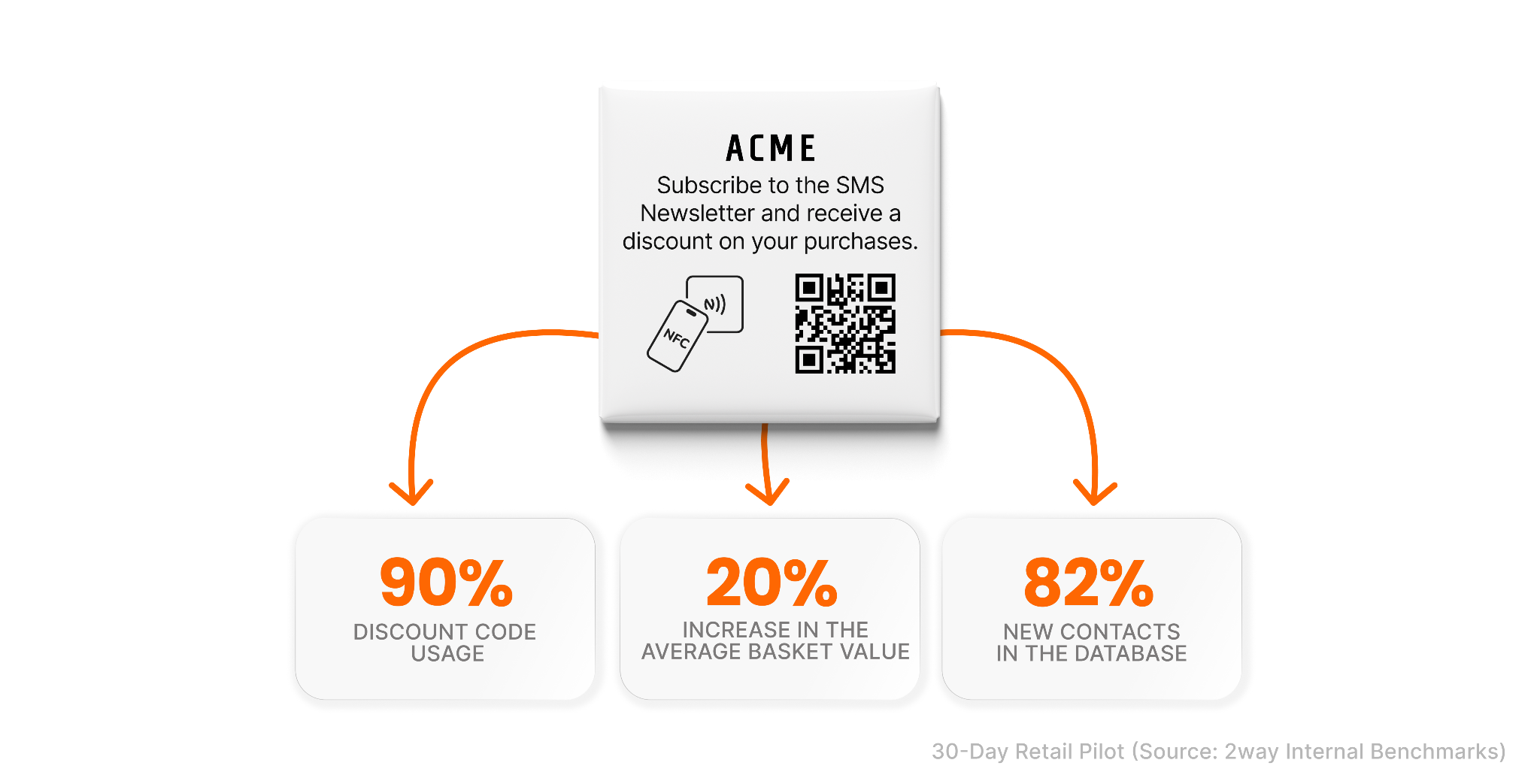
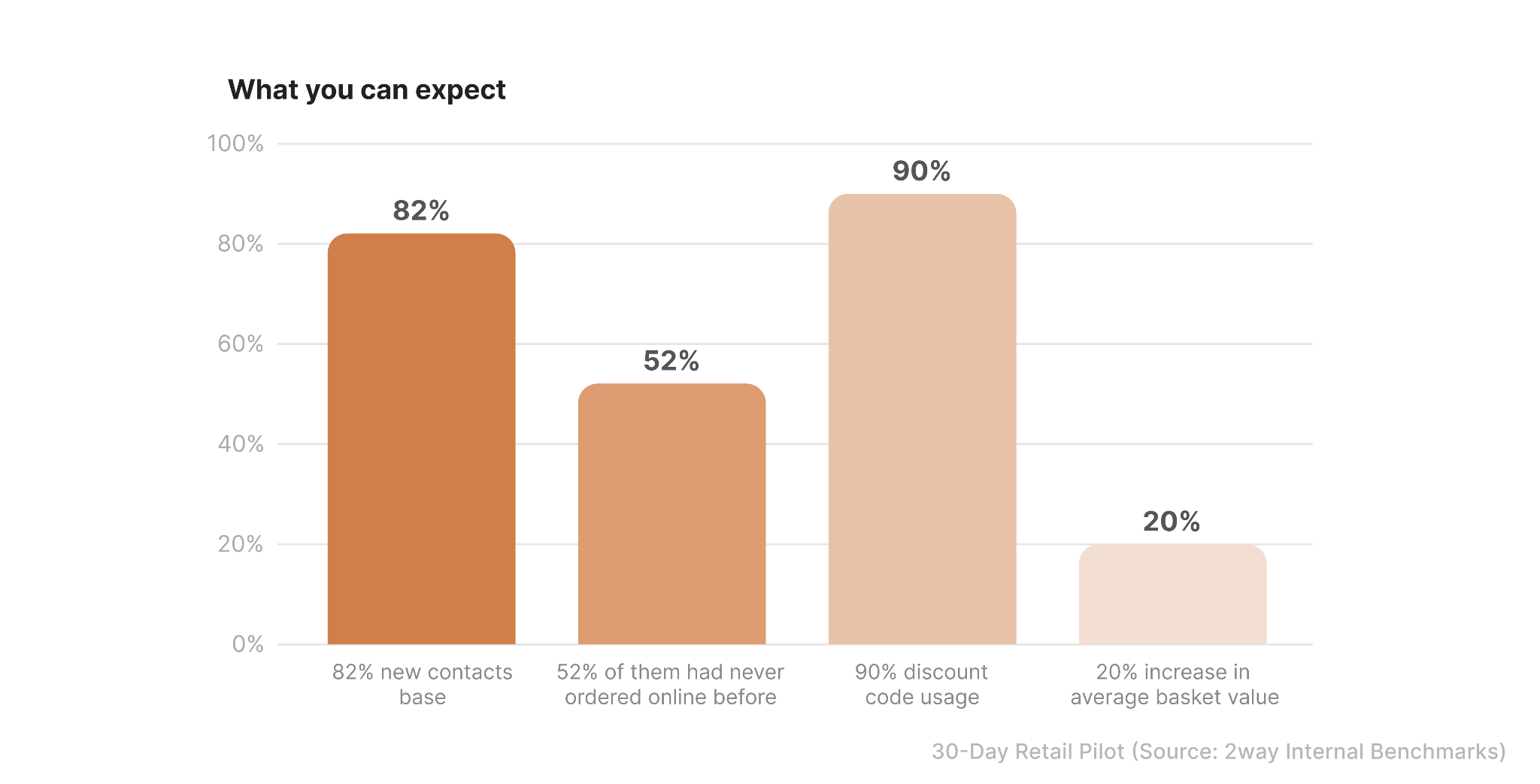
An international clothing retailer running hundreds of stores spent years knowing how many people walked through the door. Most of those visits left no contact detail the brand could act on. After a 30-day pilot of 2way Grow using NFC and QR stickers with verified phone opt-ins, they had thousands of new contacts, 90 percent discount code usage, and a 20 percent increase in average basket value.
Start with the problem you are actually solving
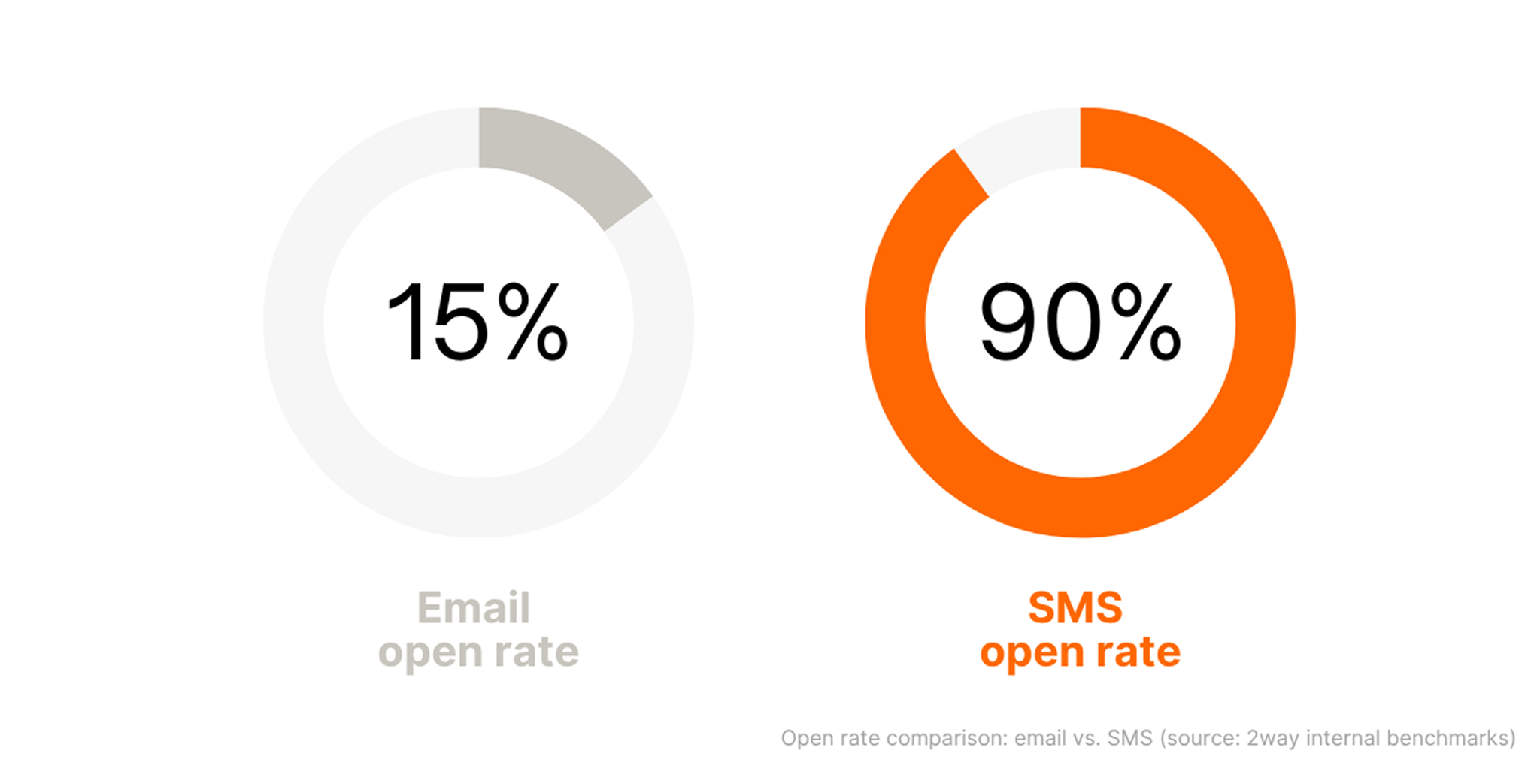
Most marketing teams trying to improve open rates begin by optimising campaigns: better subject lines, refined segments, adjusted send times. These are reasonable tactics. They address the symptom, not the cause.
The cause is the database. A contact base built from unverified email addresses collected at checkout contains an unknown share of secondary inboxes, inactive accounts, and addresses entered with no intent to engage. The campaign is fine. The audience behind it is not.
The pilot retailer did not improve their metrics by changing what they sent. They improved them by changing who was in the database before any campaign sent.
STEP 1: Identify where your customers exist but leave no trace
Before placing any technology, map the moments in your customer journey where a person demonstrates clear intent but leaves nothing behind. In physical retail, this is the fitting room and the checkout counter. In e-commerce, it is the product page at high scroll depth, the cart page, and the exit moment.
These are the locations where a customer has already decided they are interested. They are not browsing. They are considering, or they are buying. An opt-in mechanism placed at these moments captures people at peak intent, which is why the contacts collected this way convert at a higher rate than a generic sign-up form on a homepage.
The retailer placed stickers in two locations only: fitting rooms and checkout counters. 80 percent of all sign-ups happened at the checkout. The fitting room captured customers at the decision point. Neither location required staff involvement or a change to the existing store layout.
STEP 2: Make the opt-in take under 30 seconds
The single most important factor in opt-in conversion is friction. Every additional step between intent and completion loses a share of customers who would have signed up. The retailer's pilot achieved high sign-up volumes because the entire process took under 30 seconds and required nothing the customer did not already have in their pocket.
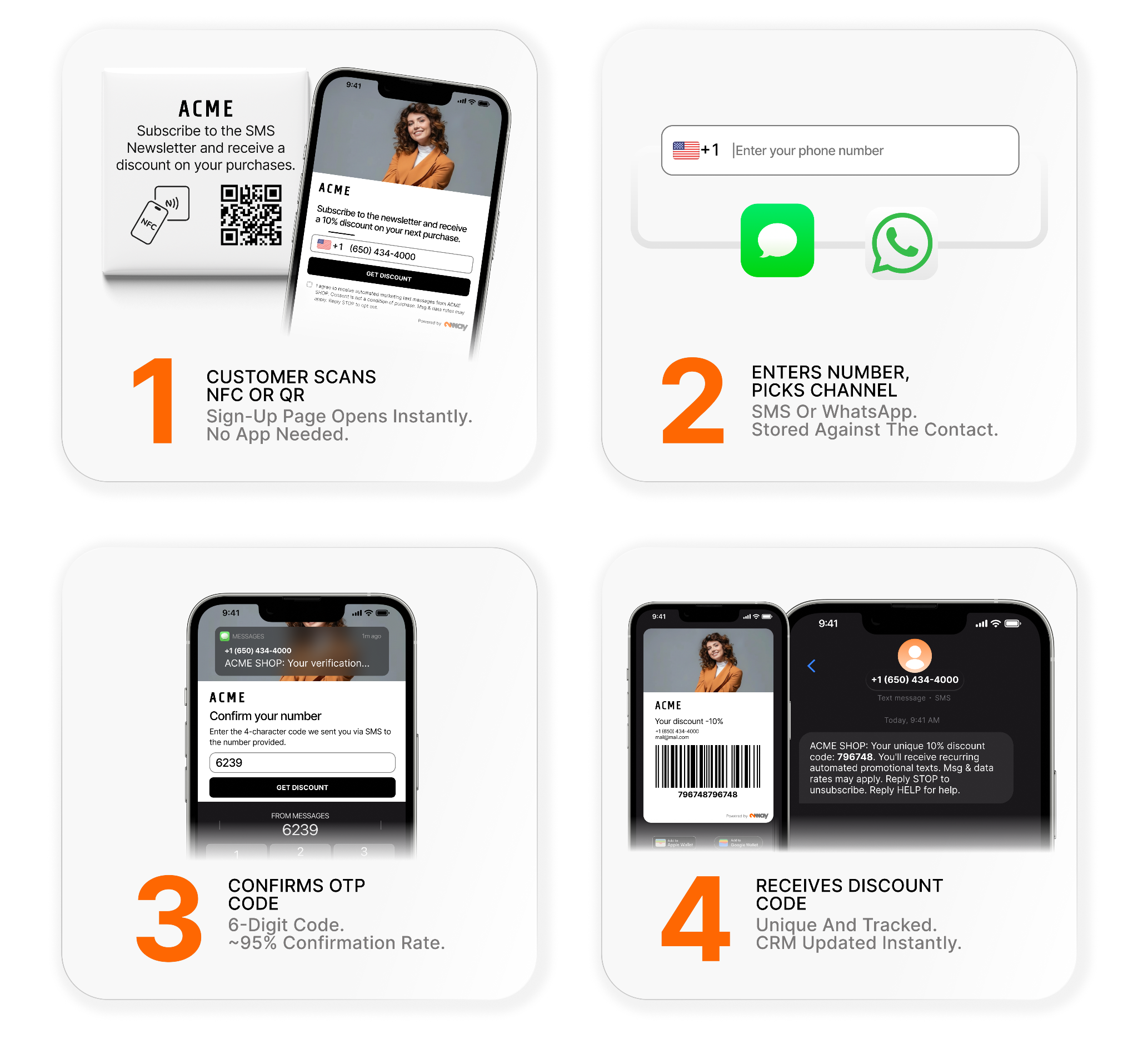
The mechanism uses NFC and QR stickers provided by 2way as part of the 2way Grow deployment. Each sticker contains a built-in NFC chip and a printed QR code, and arrives ready to place with no technical setup required on the brand's side. NFC works like contactless payment: the customer holds their phone near the sticker and a sign-up page opens automatically on their screen. The QR code does the same for customers who prefer to scan. No app download, no loyalty card, no form at the counter.
The customer enters their phone number, chooses their preferred channel (SMS or WhatsApp), and confirms a six-digit one-time passcode (OTP) sent to their device. That OTP step is not optional. It is built into the collection mechanism itself, which means every contact added to the database has confirmed their number was real and their device was in their hands at that moment. The OTP confirmation rate sits at approximately 95 percent.
STEP 3: Make every contact trackable from the first interaction
The discount code each customer receives is not a generic promo code. It is unique to their contact record and tracked at every subsequent step: whether they used it in-store, whether they added it to an online basket, and whether they completed the purchase. If the code was not used, the system sends an automatic SMS reminder.
This tracking structure is what transforms the pilot data from a sign-up count into a revenue measurement. The retailer did not simply collect 82 percent new contacts. They collected contacts whose behaviour could be observed, measured, and acted on from the moment of opt-in.
Before the first sticker goes live: connect 2way Grow to your CRM. Each verified phone contact should link to any existing customer profile, including email address if one is on file. The result is a complete contact profile: verified phone number, preferred channel, consent record, transaction history, and discount code usage, all in one place.
STEP 4: Do not assume which channel each customer uses
One of the most common mistakes in WhatsApp and SMS marketing is applying a single channel decision across an entire database. WhatsApp is the primary messaging platform in most of Western Europe, Latin America, and large parts of the Middle East and APAC. SMS remains dominant in markets where WhatsApp penetration is lower.
2way Grow resolves this at the point of opt-in. The customer chooses SMS or WhatsApp when they sign up. That choice is stored against their contact record and used for every subsequent campaign. The brand does not need to make a market-level assumption. The customer has already answered the question.
For brands operating across multiple markets, this matters operationally as well. A single 2way Grow deployment supports both channels across all markets simultaneously, with compliance rules managed per country within 2way Send.
STEP 5: Run your first campaign to the verified base
With a verified contact base in place, the first campaign should be simple and measurable. A single message, a single offer, a single tracked link. The goal is not to run a complex automation. The goal is to establish a performance baseline against which all future campaigns are measured.
90 percent of contacts collected during the pilot used their discount code. Every contact in the database had confirmed their phone number was active at the moment of opt-in and had chosen their preferred channel themselves. Those two facts are visible in the contact record before the first campaign sends.
STEP 6: Maintain database quality between campaigns
A verified contact at the moment of opt-in is not guaranteed to be reachable six months later. Phone numbers are reassigned. Customers change devices. A contact that scanned the NFC sticker at the checkout in October may not be reachable at the same number in March.
2way Send addresses this through Delivery Health monitoring, a contact-level scoring system built on native carrier signals. Before each campaign sends, the system identifies which contacts are currently reachable. Standard delivery confirmation tells you whether a message was accepted by a network after it was sent. Delivery Health tells you whether the contact will receive it before the campaign goes out.
Delivery Health operates without tracking pixels or third-party data, keeping it compliant with GDPR and equivalent regulations across all 180 countries where 2way Send operates. Sending to contacts who are no longer reachable dilutes campaign metrics in the same way that an unverified email list dilutes open rates. Delivery Health prevents that drift without requiring manual database cleaning.
Where to start
The standard implementation timeline for 2way Grow is 48 hours for a template deployment. A custom-designed opt-in page takes two to three weeks. Both options include OTP verification, channel selection, consent documentation, discount code generation, and CRM integration.
The first decision is placement. Identify two or three locations in your customer journey where intent is highest and friction can be lowest. Start there. Measure the first 30 days against a clear baseline. The retailer in this pilot did not run a complex multi-location rollout from day one. They placed stickers in two locations per store and measured what happened.
The database that results from that process is not a list of email addresses of unknown quality. It is a contact base where every entry passed the same verification at the moment they joined, chose the channel they want to use, and demonstrated intent by completing the opt-in in exchange for something concrete. That is what changes the performance baseline for every campaign that follows.
See how 2way Grow and 2way Send support this process end to end.
Frequently Asked Questions about Turning Anonymous Store Visitors into a Verified Contact Base
Why does improving campaign performance start with the database rather than the campaign itself?
A campaign can only perform as well as the audience behind it allows. Optimizing subject lines, send times, and segments addresses the symptom. If the database contains unverified numbers, inactive contacts, or people who signed up with no intent to engage, the campaign results will reflect that regardless of how well the message is written. The retailer in this pilot improved their metrics by changing who was in the database, not what was sent to them.
Why does the location of an opt-in point affect the quality of contacts collected?
A customer at a fitting room or checkout counter has already demonstrated intent. They are considering or completing a purchase, not passively browsing. An opt-in mechanism placed at that moment captures people at peak interest, which is why those contacts convert at a higher rate than contacts collected through a generic sign-up form on a homepage. In this pilot, 80% of all sign-ups came from the checkout counter alone.
What does the OTP verification step add beyond a standard sign-up?
A standard sign-up confirms that someone submitted a number. The one-time passcode confirms that the person submitting the number had the device in their hands at that moment, that the number was active, and that the sign-up was deliberate. Every contact that passes this step is verified before they enter the database, which means the brand never needs to clean the list retrospectively. The OTP completion rate in this pilot sat at approximately 95%.
How does Delivery Health differ from standard delivery confirmation?
Standard delivery confirmation tells the brand whether a message was accepted by the network after it was sent. Delivery Health identifies which contacts are currently reachable before the campaign goes out, using native carrier signals rather than tracking pixels or third-party data. The practical difference is that unreachable contacts are identified before they dilute campaign metrics, rather than after the send has already spent budget on them.
Should a brand let customers choose between SMS and WhatsApp, or decide for them?
Letting the customer choose at the point of opt-in produces more accurate results than applying a single channel decision across the entire database. WhatsApp is the primary messaging platform across much of Western Europe, Latin America, and parts of the Middle East and Asia Pacific. SMS remains dominant in other markets. A brand operating across multiple regions cannot apply one assumption to all of them. Storing the customer's channel preference at sign-up removes that decision from the brand entirely and ensures every subsequent message arrives through the channel the recipient actually uses.
More from the blog


See what your own stores would collect
We'll set up a pilot placement in one of your locations and show you the verified contacts it produces, before you commit to anything wider.
