
.png)
A behind-the-scenes walkthrough from the team that runs implementations. Part 1 of 3.
A standard 2way implementation runs in 48 hours. A custom build runs in two to three weeks. In that window, we move from the first discovery call to a fully running system ready for launch, across both physical stores and an online storefront. After launch, the pilot shifts into its measurement phase, and real customers start entering the flow.
Most of the work during implementation is design and placement: choosing the incentive, writing the copy, selecting store locations for the near-field communication (NFC) tags, adapting creative for each market. The technical setup is faster. The reason a custom implementation takes two to three weeks rather than 48 hours is that creative and placement decisions drive the conversion results once the pilot goes live, and those decisions are worth making carefully.
We run this process using 2way Studio as the strategic and creative layer. Studio handles market verification, channel selection logic, and multilingual creative generation. 2way Grow handles collection, both online through popups and offline through NFC tags and quick response (QR) codes. 2way Send handles the messages that go out to every new contact.
This post covers the first phase of the pilot, from goal definition through creative preparation.
In Part 2, we cover production, setup, and integration.
In Part 3, we cover launch, measurement, and optimization.
Stage 1: Goal definition
The first step of the implementation defines the primary goal of the pilot. The goal shapes the sign-up flow, the incentive, the copy, and the message that follows confirmation, so we lock it early.
Pilot goals typically fall into one of three categories: collecting verified phone numbers with marketing consent for promotional campaigns, driving loyalty program sign-ups with phone as the primary identifier, or promoting an app install paired with an incentive. Each of these points to a different flow design downstream, which is why the goal comes first.
Stage 2: Market verification
With the goal defined, we verify the markets included in the pilot. This is where 2way Studio does its work.
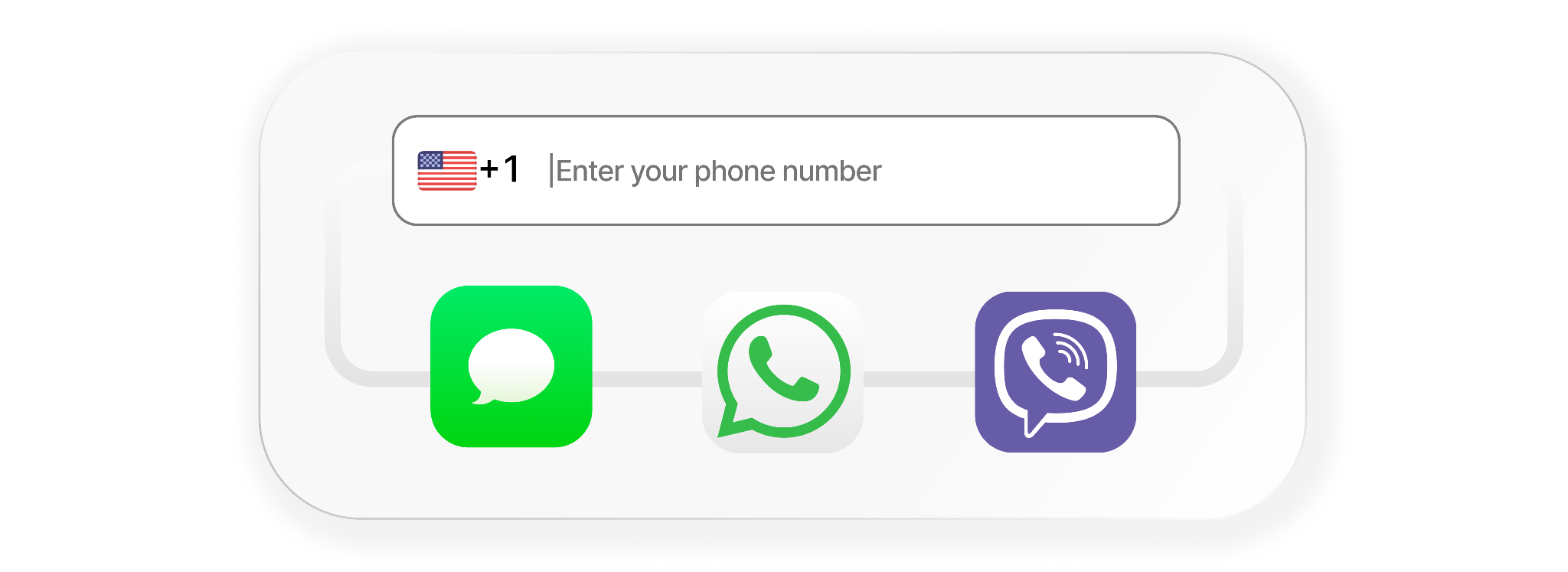
Each market has its own channel preferences, its own regulatory environment, and its own conventions for how retail audiences respond to sign-up prompts. WhatsApp is the default channel across most regions. In markets where SMS is the cultural norm or where WhatsApp coverage has documented gaps, SMS is the appropriate default. On the sign-up form itself, the subscriber picks the channel they want to receive messages on, whether that is SMS, WhatsApp, or Viber. The market-level default shapes how the form is presented, and the subscriber still has the final choice.
Studio's role at this stage covers three areas: verifying channel defaults per market, confirming local compliance requirements, and adapting copy conventions per language. This per-market work drives every downstream decision, from the wording of the incentive to the opt-in language on the landing page.
Stage 3: Scenario design
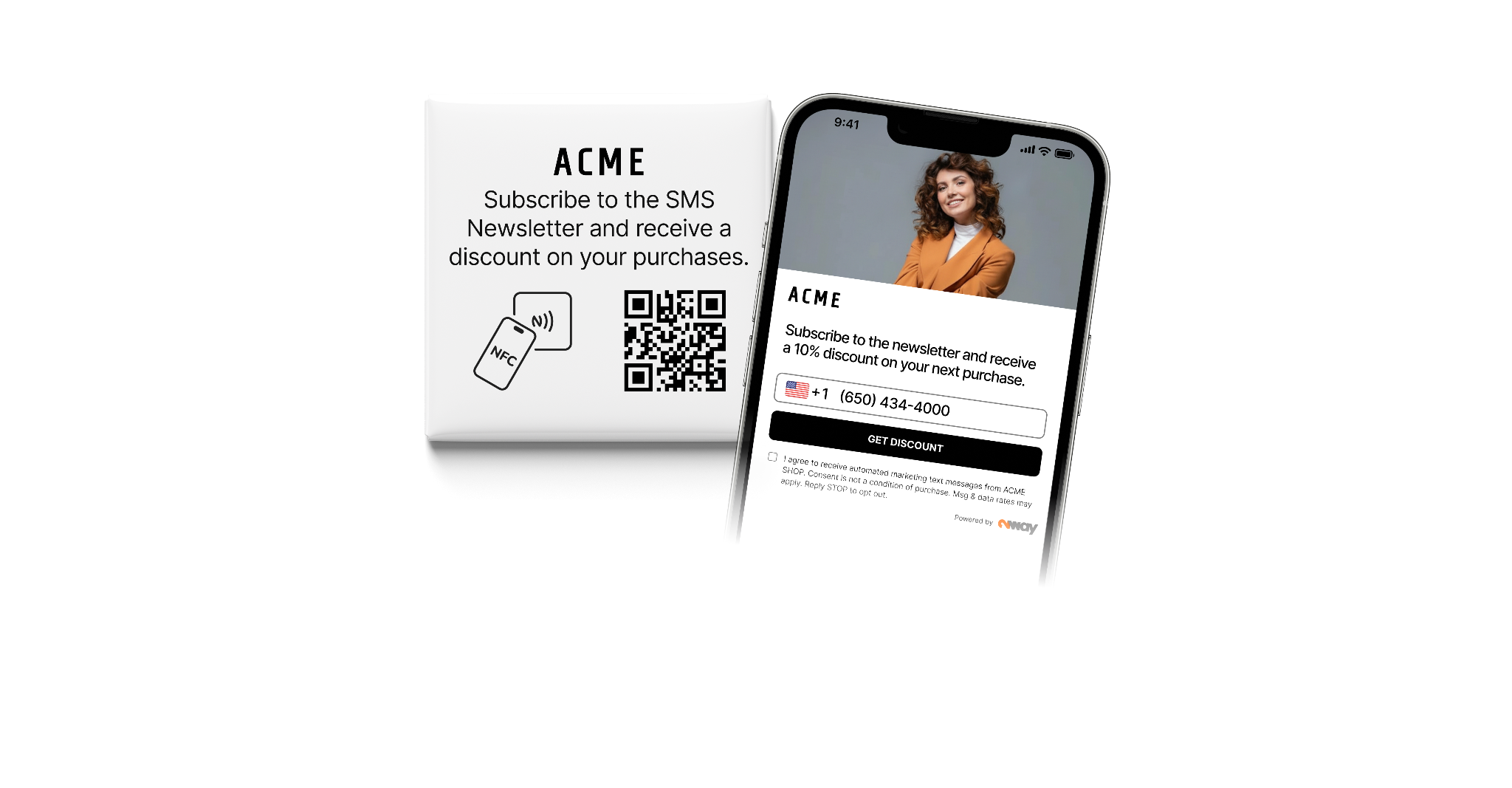
Next we design the sign-up flow. The structure is consistent across pilots: QR or NFC tag in a physical location, or a popup on the website, leads to the landing page. The customer enters a phone number, confirms marketing consent, and receives an automated SMS carrying the discount code, a link, or the sign-up confirmation.
What varies is the wrapping around that core flow. The incentive value changes per market and per audience. The copy and call to action change per language. The channel choice offered to the subscriber changes per region. The post-confirmation message changes depending on the pilot goal. The discount code can appear on the landing page, arrive by SMS or WhatsApp, or both.
The flow is designed and agreed before any tags go into production or any configuration work begins. That sequence matters, because every later stage builds on the flow defined here.
Stage 4: Communication preparation
With the flow agreed, we write the creative. This covers the sticker design, the NFC and QR tag visuals, the landing page copy, the call to action, and the benefit framing for the customer (discount, code, or sign-up bonus).
Studio generates this creative in the languages the pilot requires. Each regional variant counts as a separate language position. Global English, UK English, and US English are three different language positions for a reason: the copy that converts a visitor in London is not the copy that converts a visitor in New York. Studio adapts the creative per market, and the client signs off before anything goes live.
The client's brand and design guidelines define the creative. Studio adapts them for each market. No message goes out without the client's approval.
What is ready at the end of the preparation stages
By the end of Stage 4, the pilot has a defined goal, a verified set of markets with per-market channel defaults, an agreed sign-up flow, and approved creative in every language the pilot covers. The decisions locked in the first four stages are what every later stage builds on.
In Part 2, we cover what happens next: store location selection for the tags, sticker production, landing page setup, confirmation message configuration, and integration with the client's existing customer relationship management (CRM) system and other marketing platforms.
Continue to Part 2.
FAQ
How long does a 2way pilot implementation take?
A standard 2way implementation runs in 48 hours. A custom build, with creative and placement adapted to the specific brand and markets, runs in two to three weeks. Most of the work in either timeline is design and placement, since creative and placement decisions drive the conversion results once the pilot goes live. The technical setup itself is faster than the creative work that surrounds it.
What is the first step of a 2way pilot?
Goal definition. The primary goal of the pilot shapes the sign-up flow, the incentive, the copy, and the message that follows confirmation, so it gets locked early. Pilot goals typically fall into three categories: collecting verified phone numbers with marketing consent for promotional campaigns, driving loyalty program sign-ups with phone as the primary identifier, or promoting an app install paired with an incentive. Each points to a different flow design downstream.
Can the customer choose which channel they receive messages on?
Yes. The market-level default shapes how the form is presented, but the subscriber picks SMS, WhatsApp, or Viber on the sign-up form itself. The brand does not need to apply a single channel decision across the whole audience. The choice is stored against the contact record and used for every subsequent campaign.
More from the blog

See what your own stores would collect
We'll set up a pilot placement in one of your locations and show you the verified contacts it produces, before you commit to anything wider.
