
%2520(1).png)
A behind-the-scenes walkthrough from the team that runs implementations. Part 3 of 3.
Launch is the hinge of a 2way pilot. Everything before it, the 48-hour standard setup or the two to three week custom build, is preparation: scenario design, creative, tag production, landing page, and integration. Everything after it is real customers entering the flow and real data informing what gets adjusted next. For the full introduction to the series and the preparation stages, see Part 1.
This post covers launch, measurement, and optimization.
In Part 1, we cover goal definition and creative preparation.
In Part 2, we cover production, setup, and integration.
Stage 1: End-to-end testing
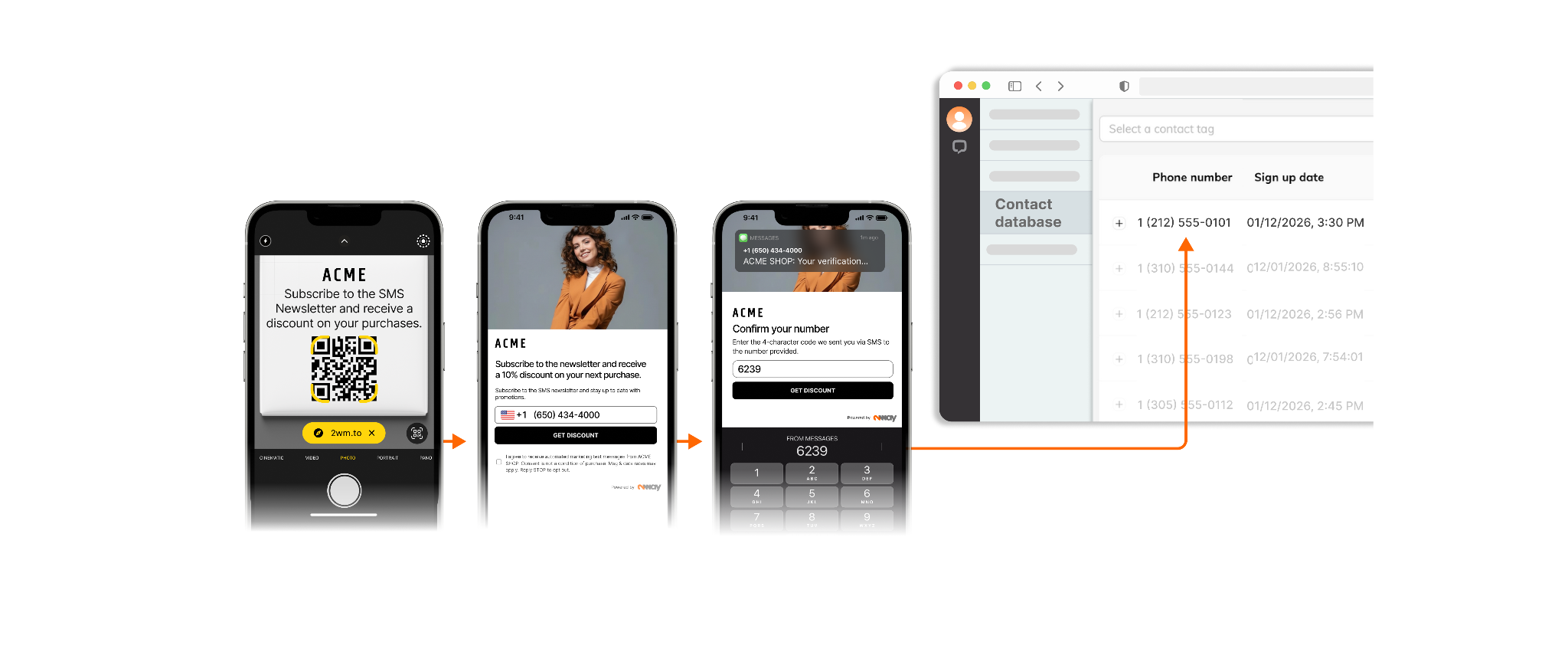
Before the pilot launches, we run the full flow as a real customer would. We check scanning, sign-up, consent capture, message delivery, and data handoff into the client's systems. Every step is verified end to end before anything goes live.
We also confirm that the contact appears in the database, that the unique discount code tracks correctly, and that the consent record is complete with every field it is supposed to capture. Anything that fails gets fixed before launch. Nothing goes live until the full flow works.
Stage 2: Launch and measurement
The pilot goes live in the agreed locations, online and offline, on the agreed date. That moment marks the transition from the implementation phase to the measurement phase. From that point, real customers enter the flow, and we measure.
For the offline side, we track opt-ins per location per day. For context, the average across 2way deployments to date is around 30 sign-ups per day per location, with top-performing locations reaching 60. For the online side, the panel captures popup impressions, popup interactions, phone numbers submitted, OTP confirmations, and conversion rate per market and per page. For both sides, we track OTP confirmation rate, discount code usage, and revenue attributed to new contacts.
Several documented benchmarks matter at this stage. The OTP confirmation rate is approximately 95%, meaning almost every user who receives the verification code completes the sign-up. SMS open rates average over 90%, compared to 15 to 20% for email. SMS click-through rates run between 5% and 30%, compared to 1 to 2% for email. Around 95% of SMS messages are read within three minutes of delivery.
The measurement setup matters because it decides what can be optimized later. The panel captures every scan, every sign-up, every code redemption, and the city and location each one came from. It also captures user-level status: who used the code, who clicked, and how engaged each contact is. All of this is exportable to a spreadsheet, so the client can combine 2way data with other systems and build their own reporting models on top.
Stage 3: Optimization
The last stage is where most of the compounding value comes from. We analyze the results and adjust placement, communication, or the offer.
If one store is consistently outperforming another, we look at placement differences and replicate the winning setup. If one market is converting well on WhatsApp but not on SMS, we adjust the default channel for that market. If one incentive copy version is outperforming another, Studio rewrites the lower-performing variant using the winning pattern. If a specific popup trigger is converting better than others, we make it the default across the client's storefront.
The work does not end at launch. Optimization continues throughout the pilot and feeds into every campaign after. The verified contact base built during the pilot becomes the foundation for every promotional, loyalty, and cart recovery campaign the client runs through 2way Send from that point on.
What the pilot leaves behind
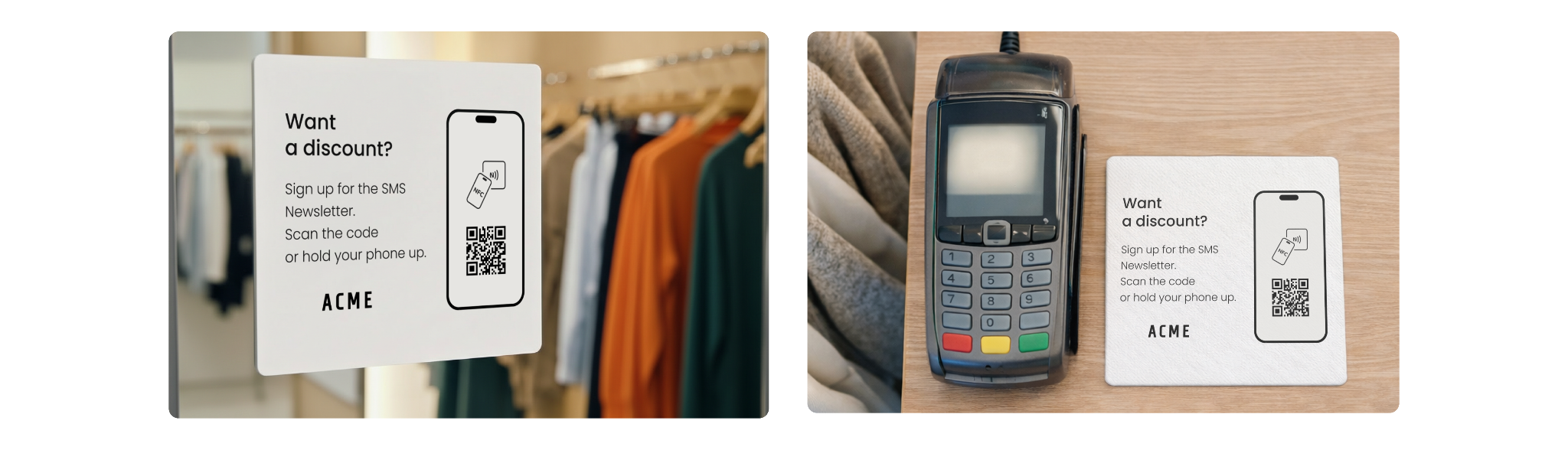
At the end of the pilot, the client has a running collection system across their physical stores and their website, feeding a single verified contact database. The popup is live on the website. The NFC and QR tags are in the selected store zones. The landing page is hosted on 2way infrastructure. The confirmation message sends automatically after every OTP confirmation, carrying the discount code or loyalty code. The integration with the client's CRM and other marketing systems is running, moving data automatically between 2way and the client's stack.
That is the build side. The measurement side runs continuously from launch. Offline opt-ins per location, online popup conversion, OTP confirmation rate, discount code usage, and revenue attributed to new contacts are all tracked in the 2way panel from day one.
For a retail network with stores and an online storefront, a 2way implementation is 48 hours for a standard setup and two to three weeks for a custom build. The first verified contact lands in the database during that window. Everything after that is measurement and optimization, feeding into every campaign the client runs from that point on.
For the full series, start from Part 1
FAQ
How do you measure the results of an SMS pilot?
Through metrics tracked at every stage of the funnel. For the offline side, opt-ins per location per day are tracked against the documented benchmark of 30 sign-ups per day on average. For the online side, the panel captures popup impressions, popup interactions, phone numbers submitted, OTP confirmations, and conversion rate per market and per page. For both sides, OTP confirmation rate, discount code usage, and revenue attributed to new contacts are tracked from launch.
Can pilot data be exported into other reporting systems?
Yes. Every scan, every sign-up, every code redemption, and the city and location each one came from is captured in the panel, along with user-level status showing who used the code, who clicked, and how engaged each contact is. All of this is exportable to a spreadsheet, so the client can combine 2way data with other systems and build their own reporting models on top.
What does a brand have running at the end of a 2way pilot?
A collection system across physical stores and the website, feeding a single verified contact database. The popup is live on the site. The NFC and QR tags are in the selected store zones. The landing page runs on 2way infrastructure. The confirmation message sends automatically after every OTP confirmation. The integration with the CRM and other marketing systems moves data automatically. The verified contact base built during the pilot becomes the foundation for every promotional, loyalty, and cart recovery campaign from that point on.
More from the blog


See what your own stores would collect
We'll set up a pilot placement in one of your locations and show you the verified contacts it produces, before you commit to anything wider.
